|
|
Unit 1 Cultural HeritagePeriod 2 Reading and Thinking
导学案

- Read quickly to get the main idea and the structure of the article; read careful to get detailed information.
- Learn to use the reading strategy---making a timeline
- Learn how to solve a tough problem by asking for help and cooperation
- Have the international awareness and understand the great strength of international cooperation.

- Read quickly to get the main idea and the structure of the article; read careful to get detailed information.
- Learn to use the reading strategy---making a timeline.
- Learn how to solve a tough problem by asking for help and cooperation.

Step 1 Leading-in
Look at the pictures below and answer the following questions:
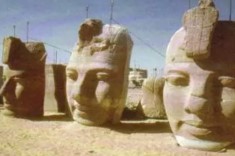
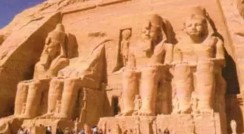
Picture 1 Picture 2
Q1: What are they ?
Make a timeline:Making a timeline that shows when different events happened can help you understand how the events are connected to each other.
Q2: Which country may they be about ?
Step 2 Before reading--- analyze the title Read the title, what information can you get ?
From Problems to Solutions
From the title and the pictures, we can know that the article mainly talks about _______________________________________________________________ ____________________________________________________________.
Step 3 While reading---Task 1
- Read the text and match the topic sentences.
Para.1 A. How to balance progress and the protection of cultural sites can be a big challenge.
Para.2 B.A committee was established to limit damage.
Para.3 C.The proposal leads to protests.
Para.4 D. The project brought governments and environmentalists
together.
Para.5 E.The spirit of the Aswan Dam project is still alive today.
Para.6 F.The project was completed and successful.
- The text mainly tells us _________________________________________.
Step 4 While reading---Task 2
Read the text again and answer the following questions.
Q1: What did the Egyptian government want to do in the 1950s? And why ?
Q2: Why did the building of the dam lead to protests ?
Q3: How were the temples and other cultural sites saved ?
____________________________________________________ __________________, __________________________________ _______________________________________________
_______________________________________
Q4: How long did it take to complete the project ?
Q5: Which word can describe the project ?
Q6: What way was used to save the cultural heritages?
Step 5 While reading---Task 3
Complete the timeline with the information from the text.
The project stars. The temples and cultural are being rescued.The project is completed . The first temple is moved. The government asks the UN for help.
19591960 1961 1961---1980 1980The government asks the UN for help.The project stars.The first temple is moved.The temples and cultural are being rescued.The project is completed.
Step 6 Post reading
1. Complete the blanks with the correct forms
There comes a time when the old must give way to the new. 1._________ (keep) the right balance between progress and the protection of cultural sites can be 2._________ big challenge.
In the 1950s, the Egyptian government wanted to build a new dam across the Nile 3._________ (benefit) more farmers, 4._________ led to protests. The government turned 5._________ the United Nations for help. Then a committee 6._________ (establish) to limit damage to the Egyptian buildings. 7._________(final) a document was signed, and the work began in 1960.
When the project ended in 1980, it was considered a great 8._________(succeed). The spirit of the Aswan Dam project 9._________ (be) still alive today. If a problem seems too difficult for a single nation, the 10._________ (globe) community can sometimes provide a solution.
2.Critical thinking
Q1: What is the “Problem” and hat is the “solution”?Problem: ______________________________________________________________________________________________________________________________________________ ___________________________________________________________________________
Solution: ______________________________________________________________________________________________________________________________________________ ___________________________________________________________________________
Q2: How to deal with the construction and the protection of cultural relics?
Q3: As students, what should we do to protect our cultural relics?
Step 7 Summary
Summarize the structure of the text.
| overt plot(明线)
| covert plot(暗线)
| structure
| Part 1 (Para.1)________________
| keep __________ between progress and the protection of cultural sites
| ________
| Problems
| Part 2 (Para
2~5)________________
| build a new ________ across the Nile
| challenged
| ________
| | protest, turn to________, a committee, work together, success
| ________
| | Part 3 (Para.6)________________
| team ________, best example, ________ community, provide a solution
| happy/satisfied
| Inspiration
|
Step 8 Homework
Review what we have learned today.
答案:Step 1 Leading-in
Look at the pictures below and answer the following questions:
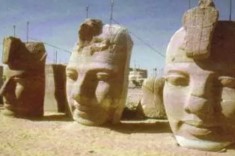
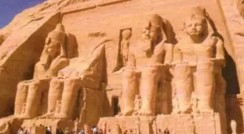
Picture 1 Picture 2
Q1: What are they ?
Picture 1 is the statues of human face
Picture 2 is the statues of a temple.
Make a timeline:Making a timeline that shows when different events happened can help you understand how the events are connected to each other.They are cultural relics.
Q2: Which country may they be about ?
They are about Egypt.
Step 2 Before reading--- analyze the title Read the title, what information can you get ?
From Problems to Solutions
From the title and the pictures, we can know that the article mainly talks about Egypt may have a problem about how to protect the cultural relics and finally the problem was solved successfully.
Step 3 While reading---Task 1
1.Read the text and match the topic sentences.
Para.1 A. How to balance progress and the protection of cultural sites can be a big challenge.
Para.2 B.A committee was established to limit damage.
Para.3 C.The proposal leads to protests.
Para.4 D. The project brought governments and environmentalists
together.
Para.5 E.The spirit of the Aswan Dam project is still alive today.
Para.6 F.The project was completed and successful.
2.The text mainly tells us sometimes a big challenge can lead to a great solution.
Step 4 While reading---Task 2
Read the text again and answer the following questions.
Q1: What did the Egyptian government want to do in the 1950s? And why ?
build a new dam to control flood, produce electricity and supply water to more farmer in the area.
Q2: Why did the building of the dam lead to protests ?
Because it would likely damage a number of temples and destroy cultural relics.
Q3: How were the temples and other cultural sites saved ?
established a committee to limit the damage and raised money Experts investigated, conducted some tests and made a proposal tests Temples and cultural sites were taken down piece by piece Move them in a safe place and put back together
Q4: How long did it take to complete the project ?
20 years
Q5: Which word can describe the project ?
Successful/amazing
Q6: What way was used to save the cultural heritages?
The international cooperation
Step 5 While reading---Task 3
Complete the timeline with the information from the text.
The project stars. The temples and cultural are being rescued.The project is completed . The first temple is moved. The government asks the UN for help.
19591960 1961 1961---1980 1980The government asks the UN for help.The project stars.The first temple is moved.The temples and cultural are being rescued.The project is completed.
Step 6 Post reading---Critical thinking
1. Complete the blanks with the correct forms
There comes a time when the old must give way to the new. 1.Keeping (keep) the right balance between progress and the protection of cultural sites can be 2._a_ big challenge.
In the 1950s, the Egyptian government wanted to build a new dam across the Nile 3.to_benefit (benefit) more farmers, 4.which led to protests. The government turned 5.to the United Nations for help. Then a committee 6.was_established (establish) to limit damage to the Egyptian buildings. 7.Finally (final) a document was signed, and the work began in 1960.
When the project ended in 1980, it was considered a great 8.success (succeed). The spirit of the Aswan Dam project 9._is_ (be) still alive today. If a problem seems too difficult for a single nation, the 10.global (globe) community can sometimes provide a solution.
2.Critical thinking
Q1: What is the “Problem” and hat is the “solution”?Problem: the Egyptian government wanted to build a new dam across the Nile for developing its economy and avoiding the floods and drought, but it can destroy the cultural heritage and led to the protests.
Solution: asked for the UN, then cooperated internationally to save the relics by moving the cultural relics to a safe place piece by piece.
Q2: How to deal with the construction and the protection of cultural relics?
I think although the construction is important, the government should also make an effort to protect the cultural relics. When they disappear, they won’t come back and will lose its value. The government should keep the right balance between the construction and the protection of them.
Q3: As students, what should we do to protect our cultural relics?We should know more about cultural relics in our country and do something we can to protect the cultural relics. For example, we can spread the knowledge of cultural relics and promote the awareness of the protection of them.
Step 7 Summary
Summarize the structure of the text.
| overt plot(明线)
| covert plot(暗线)
| structure
| Part 1 (Para.1)The introduction
| keep balance between progress and the protection of cultural sites
| hard
| Problems
| Part 2 (Para
2~5)The process of saving cultural relics
| build a new dam across the Nile
| challenged
| Solutions
| | protest, turn to UN, a committee, work together, success
| helpful
| | Part 3 (Para.6)Summary
| team spirit, best example, global community, provide a solution
| happy/satisfied
| Inspiration
|
Step 8 Homework
Review what we have learned today.
|
|
 川公网安备51152402000101号 )|网站地图


 发表于 2026-3-7 05:19:25