|
|
Unit 4 Where’s my schoolbag?
Section B (2a-2c)
Teaching Aims
| Ss can write about their rooms and get useful information from other’s description.
tidy, but, our, everywhere, always
1. I’m tidy, but Gina is not.
2. Gina’s books are everywhere— on her bed, on the sofa and under the chair.
3. “Where are my keys?” Gina always asks.
| Teaching Difficulties
| Let Ss write about their rooms and get useful information from other’s description.
| Teaching Aids
| multimedia courseware or other realia that the T needs for teaching
|
Teaching Procedures
| Tips
| Step 1 Warm up
| | Look and say
- T asks Ss to see the pictures and tell their names on PPT P5.
(T shows the pictures one by one and asks students the question: What is this in English? or What is that in English? Ss answer the question using the sentence pattern: It is a … If Ss cannot say the words correctly, T must correct them and ask them to say the words again.)
- T shows Ss the picture on PPT P6 and ask Ss to try to memorize as many things as they can. Then write down all the things they can remember.
(First, T shows Ss the picture on P6 and asks them to remember the things in the picture as many as they can. Second, T shows Ss the pictures again and ask Ss to remember the locations of these things. Then T asks them to fill in the blanks on P7. When students are writing down the things, T can walk around and check Ss’ pronunciations of these words.)
Lead in
- T asks Ss to see the pictures on PPT P9 & P10 and say the items in English.
(T shows the pictures one by one and ask students the question: What is this in English? or What is that in English? Ss answer the question with the sentence pattern: It is a … If Ss cannot say the words correctly, T must correct them and ask them to say the words again.)
Step2: T ask Ss to see the pictures and say the words on PPT P10-P11.
T: Let’s play a game together. I will show you some pictures and you can say it in English. If you can say the words, just stand up and say it out.
Free talk
- Let Ss to work in groups of four. Ask them to answer the questions and share their answers with their team members.
- Is your room tidy or not?
- What things are there in your room?
- Do you clean your room by yourself?
| | Step 2Presentation & Practice
| | Pre-reading
2a
- T ask Ss to write the words they know for the things in the picture.
Have Ss study the picture for three minutes and then recreate the picture with their textbooks closed using only words and a diagram. Ss shouldn’t draw anything in detail. E.g. Ss write the word “books”, “keys” and “bookcase” where each thing would be in the actual picture in the textbook. Give Ss time to do the activity and have them compare their diagrams with partners before opening their textbooks to check if their diagrams with partners before opening their textbooks to check if their diagrams match the picture.
Answers will vary.
- T ask Ss to look at the picture and answer the questions.
(Ss can discuss the ten questions in groups and then share in class. The group who raises their hands first and can answer the questions all correctly will be the winner. If there are mistakes in that groups’ answers, other groups can make correction.)
While-reading
2b
- Ask Ss to look at the picture in 2b and make predictions:
1. Who are the two girls?
2. What’s the relationship (关系) between them?
3. What will the passage talk about?
(T tells Ss what predict is: to have a guess. Any answer is OK here. Ss can tell the reason why they guess so.)
First Reading
2b
- Ask Ss to skim the passage and answer the questions.
Q1: Is Kate tidy?
Q2: Is Gina tidy?
(T tells Ss what skim is: to read fast and find the key words. T can give Ss help when necessary.)
Second Reading
- Ask Ss to scan the passage and answer the questions.
Q1: Where are Kate’s keys?
Q2: Are Kate’s books and tapes in the bookcase?
Q3: Is Kate’s clock in her schoolbag?
Q4: Where is Gina’s white model plane?
Q5: Where are Gina’s book?
Third Reading
- T asks Ss to retell the passage.
(T can write some key words on the board to remind Ss of the passage. Instead of grammar, T may want to focus more on contents and logic when doing a retelling activity. )
Post-reading
- Ask Ss to fill in the blanks about the passage on PPT P23.
(This part is a summary for Ss, and T can also check Ss’ understanding about the passage.)
| | Step 3Language points learning
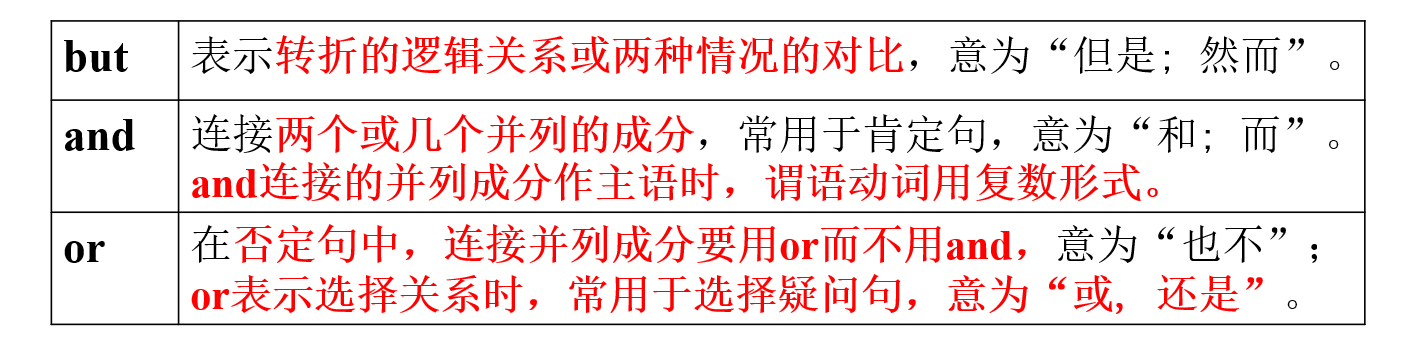
| | 【易混辨析】并列连词 but, and 与 or
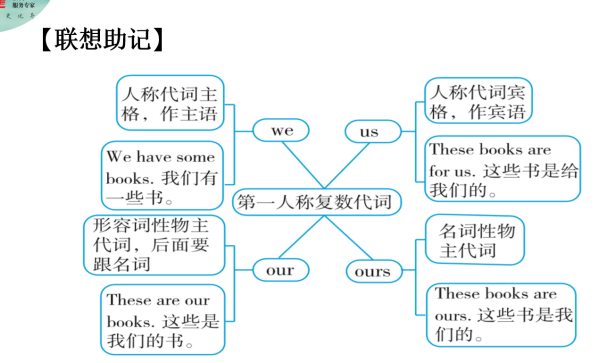
our pron.我们的; our 是形容词性物主代词,其后一定要接名词。
everywhere adv. 处处; 到处; 各个地方; everywhere是副词, 由“every(每个)+where(在哪里)”构成,相当于 here and there,其前不能使用in, at, to之类的介词。
| | Step 4 Exercises& Homework
|
| Exercises
- Ask Ss to do the exercises on PPT P30-P32.
- T asks Ss to make a summary about what they have learned today.
Homework
- Read and recite the new words and phrases.
- Do the exercises in students’ book.
| | Teaching Reflection
| I used various reading strategies, such as skim, scan, retell, etc. to help Ss quickly understand the text. I paid much attention to the usage of the language points and let students make enough sentences to master the language points, so Ss can master the language points and understand the passage clearly. However some B level students cannot use the language points well, so T needs to pay more attention to them.
|
|
|
 川公网安备51152402000101号 )|网站地图


 发表于 2026-3-2 06:02:28