|
|
UNIT 1 PEOPLE OF ACHIEVEMENT
Stephen Hawking was born on the 300th anniversary of Galileo's death.He has come to be thought of as the greatest mind in physics since Albert Einstein.
Hawking grew up outside London.His father was a doctor;his mother was active in politics.He was not a smart schoolboy,but knew from early on that he would study science.He became good at mathematics and in 1958 he and some friends built a simple computer that actually worked.In 1959 he won a scholarship to Oxford University.In 1962 he got his degree with honors and went to Cambridge University to get a PhD in cosmology.There he became interested in black holes.After receiving his PhD, he stayed at Cambridge,becoming known even in his middle 20s for his pioneering ideas.
In 1968 he studied in the Institute of Astronomy in Cambridge.He published the very technical book,The Large Scale Structure of SpaceTime and afterwards made a great discovery.It had always been thought that nothing could escape a black hole.He continued working on the theory of the origin of the universe.
At the age of 32, he was named a fellow of the Royal Society; at the same year he received the Albert Einstein Award.Five years later, in 1979, he was appointed Top Professor of Mathematics at Cambridge, which was held by Sir Isaac Newton 300 years earlier.
In 1988 Hawking wrote A Brief History of Time, which became a bestseller.He wrote other popular articles and appeared in movies and television.He remains extremely busy, and his work hardly slowed by the disease that affects muscle control, for which he uses a wheelchair and speaks through a speech computer.He said,“My goal is simple.It is complete understanding of the universe,why it is as it is and why it exists at all.”
开启快乐学习之旅
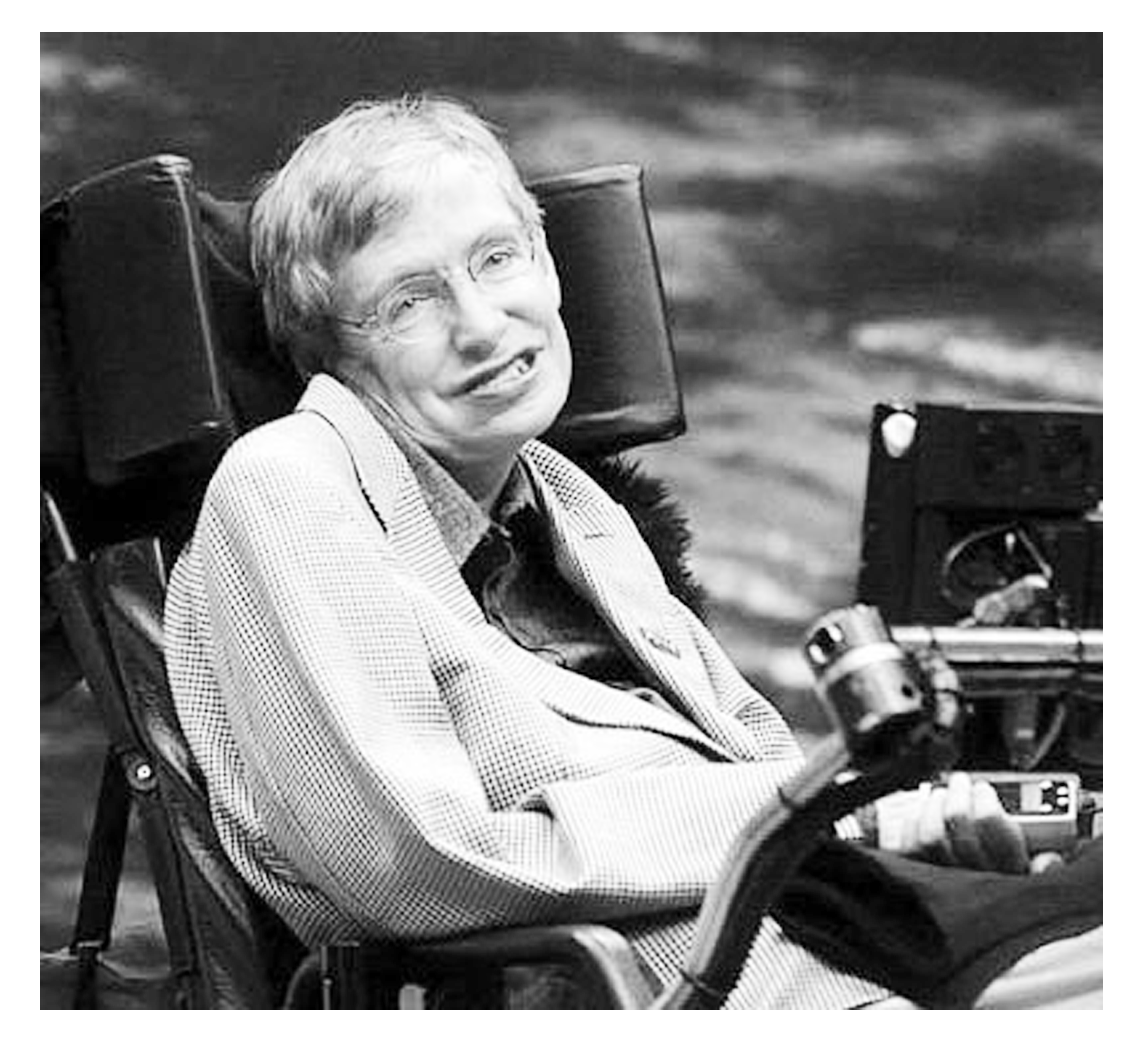
斯蒂芬·霍金生于伽利略去世的300周年纪念日。他是自阿尔伯特·爱因斯坦以来物理学界最伟大的人物。
霍金是在伦敦郊区长大的。他的父亲曾是一位医生,而母亲是政治活动者。霍金在学校时并不很聪明,但他很早就立志要学习自然科学。他渐渐在数学方面展露特长,1958年他和一些朋友一起组装了一台简单的能够进行实际运算的计算机。1959年,他获得了牛津大学的奖学金。1962年,他以优异成绩获得了学位,并前往剑桥大学攻读宇宙学博士。在那里,他开始对黑洞感兴趣。在获得博士学位后,他继续留在剑桥,在他二十几岁的时候就由于他的开拓性的想法而闻名。
1968年,他在剑桥大学的天文研究所做研究。他出版了一本非常专业的书《时空的大尺度结构》,之后又做出了一项重大发现。科学家们过去一直认为没有任何物质能逃离黑洞的捕捉。他继续研究宇宙起源的理论。
32岁的时候,他进入了皇家科学院;同年,他又获得了阿尔伯特·爱因斯坦奖。五年后,也就是1979年,他被任命为剑桥大学数学系的首席教授,这个职位是萨克·牛顿爵士在300年前所担任过的。
1988年,霍金写了《时间简史》一书,这本书成了一本畅销书。他又写了其他一些受欢迎的文章,并在电影和电视上露面。他一直都相当忙碌,他的工作很少因为疾病而受到耽误,这是一种会影响到肌肉控制的疾病,也因为如此,他需要坐在轮椅上,并且通过一台语音电脑讲话。他说:“我的目标很简单。就是完全了解宇宙,为什么它是现在这样和为什么它存在。”
模块核心素养导航
主题语境:人与社会
| 主题群:历史、社会与文化
| 语篇类型:记叙文
| 文化知识
| 语言知识
| (1)词汇知识:crucial;vital;commit;evaluate;distinct;boil;obtain;acknowledge;defeat;analyse;insist;conclusion;flee等。
(2)语法知识:学习非限制性定语从句。
(3)语用知识:描写你钦佩的人。
| 介绍对社会有突出贡献的人物的生平、事迹、成就、影响、成功的因素、面对荣誉的态度等,培养学生向著名人物学习的意识,并立志自己也要成为对社会有突出贡献的人。
|
Section Ⅰ Reading and ThinkingⅠ.重点单词
1.physiology n.生理学;生理机能
2.crucial adj.至关重要的;关键性的
3.vital adj.必不可少的;极其重要的;充满生机的
4.commit vt.承诺;保证(某个人、机构等) vi.忠于;全心全意投入(工作、活动等)→committed adj.尽心尽力的;坚定的;坚信的→commitment n.投入,奉献;承诺,许诺,保证
5.academy n.(艺术、文学、科学等的)研究院;学会;专科院校→academic adj.学业的;学术的
6.objective n.目标;目的 adj.客观的→subjective adj.主观的
7.botanical adj.植物学的
8.evaluate vt.评价;评估→evaluation n.评价;评估
9.property n.性质;特征;财产
10.distinct adj.清晰的;清楚的;有区别的→distinction n.区别,差别;特点,特性
11.extract n.提取物;摘录 vt.提取;提炼;摘录;(用力)拔出
12.boil vt.& vi.(使)沸腾;煮开;烧开 n.沸腾;沸点→boiling adj.达到沸点的;沸腾的
13.liquid n.液体 adj.液体的;液态的→solid n.固体 adj.牢固的,可靠的
14.obtain vt.(尤指经努力)获得;赢得 vi.(规章、习俗等)存在;流行
15.acknowledge vt.承认(属实、权威等);(公开)感谢→acknowledgement n.承认,确认;鸣谢
16.defeat n.失败;挫败 vt.击败;战胜
17.analyse vt.分析→analysis n.分析→analyses n.[pl.]分析
18.apparently adv.显而易见;看来;显然→apparent adj.显然的;表面上的
19.substance n.物质;物品;事实根据
20.insist vi.&.vt坚持;坚决要求
21.scientific adj.科学(上)的;关于科学的→scientist n.科学家 →science n.科学
22.mostly adv.主要地;一般地
23.conclusion n.结论;推论→conclude vt.推断出,断定;终止,结束
24.flee vi.& vt.(fled,fled)迅速离开;逃跑
25.circumstance n.[usually pl.] 条件;环境;状况
26.novelist n.小说家→novel n.(长篇)小说
27.flow n.流;流动;流畅;供应 vi.流;流动
28.chart n.图表 vt.记录;制订计划
Ⅱ.重点短语
1.commit oneself to do承诺;保证(做某事、遵守协议或安排等)
2.insist on坚决要求
3.wear and tear(正常使用造成的)磨损;损耗
4.pay attention to 注意
5.lead to导致
6.die from死于……病
7.graduate from毕业于
8.with the objective of以……为目的
9.acknowledge defeat承认失败
10.get stuck卡住,陷入
11.by chance偶然
12.draw out抽出;拖延,拉长
13.other than 除……之外
14.relate to 与……有联系
15.be distinct from与……不同
16.change one's mind 改变主意
17.care about关心,在意
18.beyond one's control某人无法控制
19.under construction正在建设中
20.flow chart流程图
Ⅲ.重点句型
1.Artemisinin has become a vital part of the treatment for malaria, and is_thought_to_save 100,000 lives a year in Africa alone.
青蒿素已经成为治疗疟疾的关键,人们认为青蒿素每年仅在非洲就能救十万人。
2.In 1967, the Chinese government formed a team of scientists with_the_objective_of discovering a new treatment for malaria, and Tu Youyou was among the first researchers chosen.
1967年,中国政府组建了一支以探索治疗疟疾新方法为目的的科学家队伍,屠呦呦是其中首批入选的研究人员。
3.Upon_hearing that she had been awarded the Nobel Prize,she said...
当听到自己被授予诺贝尔奖时,她说……
4.It_struck_him_that the other Chinese men in the photo apparently did not care about what_was_happening to their fellow countrymen.
令他震惊的是,照片中的其他中国人显然并不关心他们的同胞发生了什么。
5.From this, he concluded that the crucial problem in China was not physical illness, but the spiritual illness of people at that time.
由此,他得出结论,那时中国的关键问题不是身体疾病,而是人们的精神疾病。
6.One medical text from the fourth century suggested_using the extract from sweet wormwood to_treat a fever.
一本四世纪的医学文献推荐使用青蒿提取物来治疗发烧。
7.They then tried_boiling fresh wormwood, and using the liquid obtained from this to treat malaria, but this did_not_work either.
然后,他们尝试煮沸青蒿,使用从中提取的液体来治疗疟疾,但是也没管用。
He wasn't there at the crucial moment(when he was needed most).
紧要关头他却不在那里。
Parents play a crucial role in preparing their child for school.
父母对孩子做好上学的准备起着至关重要的作用。
crucial factor/ issue/decision关键性的因素/问题/决定
be crucial to/for sth.对……至关重要
be crucial that... ……是极其重要的
Winning this contract is crucial to the success of the company.
If the injuries are second or third degree burns, it is vital to get the victim to the doctor or hospital at once.
如果是二度或者三度烧伤,至关重要的是把伤者立刻送去看医生或送往医院。
This matter is of vital importance to us.
这件事对我们来说至关重要。
be vital to/for sth. 对……极为重要的
It is vital to do sth. 做……很重要
It is vital that... ……是十分重要的
It's vital that we (should) carry out the operation immediately.
我们应立即开始手术,因为这是生死攸关的。
It is vital+that...句型中从句要用should+do虚拟结构,should可省略。
It is vital to_keep(keep) an accurate record of every transaction.
Borrowers should think carefully before committing themselves to taking out a loan.
借款人应当慎重考虑之后再行借贷。
commit v.犯(罪或错等);承诺;保证
commit sb./sth.to sth.将某人/事交给某处保留
commit sb./oneself to sth./doing sth./to do sth.承诺(做)某事
commitment n. 承诺;交托;信奉
committed adj.尽心尽力的;坚信的;坚定的
committee n.委员会
①Giving up my job to go back to full-time education was a big commitment (commit),but now I know it was the best decision I had ever made.
②Most crimes are_committed(commit) by young men.
I cannot evaluate his ability without seeing his work.
没见过他的工作,我无法评估他的能力。
Learn to evaluate all situations you find.
学着去评估你发现的所有情况。
①Our research attempts to evaluate(evaluation) the effectiveness of the different drugs.
②One's contributions and mistakes will be_evaluated(evaluate) by later generations.
His voice was quiet but every word was distinct.
他说话声音不大,但字字清晰。
distinction n.差别;区分;卓著
We should learn to make a distinction between right and wrong.
我们应该学会分清是非。
She had the distinction of being the first woman to fly the Atlantic.
她不同凡响,是第一个飞越大西洋的女子。
The new law makes no distinction(distinct) between adults and children.
(1)vt.& vi.(使)沸腾;煮开;烧开
The water is beginning to boil.
水开始沸腾。
Boil the egg for three minutes.
把鸡蛋煮三分钟。
(2)n.沸腾;沸点
Bring the soup to the boil, then allow it to simmer for five minutes.
把汤煮开,然后文火煮五分钟。
boiling water 沸水(即处于100℃的开水)
boiled water 白开水(烧开过的水)
Boiling(boil) water cracked a cup across the bottom.
I finally managed to obtain a copy of the report.
我终于设法弄到了这份报告的一个副本。
These conditions no longer obtain.
这些条件不再适用。
obtain advice/information/promise得到忠告/信息/应许
obtainable adj.可获得的;可得到的
The perfect body has always been difficult to_obtain(obtain).
Do you acknowledge that you've been wrong?
你承不承认你错了?
We wish to acknowledge the support of the university.
我们希望对这所大学所提供的支持表示感谢。
acknowledge doing sth.承认做了某事
It is universally acknowledged that...……是大家公认的
acknowledge oneself beaten承认失败
acknowledge sb.向某人打招呼,问候
acknowledge sb.'s letter向某人表示信已收到
acknowledge sb./sth.to be...承认某人/某物是……;认为……是
acknowledge that承认……
acknowledge sb.as...=accept sb.as认为/接受某人是/成为……
acknowledge sb.with sth.以……感谢某人
acknowledgement n.承认;感谢
Professor Edward is widely acknowledged(acknowledge) as the best tutor in teaching the students how to revise essays.
JOHN SNOW DEFEATS “KING CHOLERA”
约翰·斯诺战胜“霍乱王”
(1)vt.打败;战胜;使受挫
Li Na defeated her opponent and won the first in the final of the French Open in 2011.
在2011年法国网球公开赛决赛中,李娜击败对手获得了冠军。
The proposal was defeated by 16 votes to 6.
因16票反对,6票赞成,该提议未能通过。
(2)n.[C,U]失败
The Brazil national football team suffered a defeat in the World Cup.
巴西国家足球队在世界杯上被击败了。
defeat, beat, win
defeat
| 击败,强调过程和结果
| 宾语是对手
| beat
| 打败;(连续)击打
| 宾语是对手
| win
| 赢得;获胜
| 宾语是game或prize等
|
The navy played a limited but significant role in defeating(defeat) the rebellion.
We should analyse what they said and not just agree with everything.
我们应该对他们的意见加以分析,不要随声附和。
analysis n.分析,它的复数形式是analyses。
analysable adj.可分析的;可分解的
His analysis was always convincing.
他的分析总是令人信服的。
I want a detailed report of all the analyses.
我想要一份所有分析的详细报告。
Many compounds are analysable.
许多化合物是可分解的。
They collect blood samples for analysis(analyse) at a national laboratory.
Apparently, they are getting married soon.
很显然,他们要结婚了。
I thought he had found a new job, but apparently he hasn't.
我原以为他找到了新工作,但显然还没有。
apparent adj.显而易见的;明白易懂的;显然的;表面上的
It was apparent from her face that she was really excited.
从她脸上一眼就可以看出她的确很兴奋。
It soon became apparent to all that he couldn't solve the problem.
很快大家就明白了他无法解决这个问题。
Apparently(apparent) they are getting divorced soon.
They always insist on high quality.
他们一贯坚持高质量。
Her parents insisted on speaking to the headmaster.
她父母坚持要和校长谈话。
She insisted on him wearing a suit.
她坚持要他穿西装。
He insisted that he had seen a ghost.
他坚持说自己见到鬼了。
insist on sth.坚决要求某事;坚持说某事
insist on/upon doing sth.坚持要做某事
insist on/upon one's doing sth.坚持要求某人做某事
insist的词义不同,其后的宾语从句形式也不同:
词意
| 宾语从句
| 坚持要求
| 宾语从句使用虚拟语气,即从句谓语是“(should+)do”结构。
| 坚持认为;坚持说
| 宾语从句使用陈述语气。
|
Insisting that Tom had stolen his car, Smith insisted that Tom (should) be put in prison.
由于坚持认为汤姆偷了他的车,史密斯坚持要求把汤姆送进监狱。
①If you insist on/upon leaving now, please go ahead.
②He insists that she come(come).
We can safely draw some conclusions from our discussion.
从讨论中我们可以有把握地得出一些结论。
make a conclusion下结论
come to/draw/arrive at/reach a/the conclusion得出结论
in conclusion(=to conclude)最后,总之(常作插入语)
jump/leap to conclusions/the conclusion that...匆忙下结论,贸然断定
conclude vt.& vi.结束;推断出
conclude...(to be)...断定……(是)……
Let us conclude our meeting with a song.
请让我们用一首歌来结束我们的会议。
What do you conclude from the facts?
从这些事实中你得出了什么结论?
I've come to the conclusion(conclude) that he's not the right person for the job.
He spent six months in prison before fleeing the country.
他在逃离那个国家之前坐了六个月的牢。
Many German artists fled to America at the beginning of World War Ⅱ.
二战开始时,很多德国艺术家逃到了美国。
flee与escape
flee只说明动作,不强调结果;escape逃离,结果是成功的。
The enemy fled in disorder but only a few of them narrowly escaped death.
敌人纷纷逃跑,但只有少数侥幸逃生。
①All the teachers and students managed to_flee(flee) the burning teaching building.
②He applied for asylum(政治庇护) in 1987 after fleeing(flee) the police back home.
In/Under the circumstances he felt unable to accept the job.
在这种情况下,他觉得无法接受这项工作。
I know I can trust the woman in any circumstances.
我知道我在任何情况下都能信任那个女人。
in/under the circumstances 在这种情况下,既然如此
in/under no circumstances 决不,无论如何都不(置于句首时,句子部分倒装)
①—Can I use the telephone on the table,sir?
—Under no circumstances is (be) anyone allowed to use the telephone in the office for personal affairs.
②The company reserves the right to cancel this agreement in certain circumstances(circumstance).
考点集训一1.They insisted upon being_given(give) every detail of the case.
2.The conclusion(conclude) of the book was disappointing.
3.The President is committed to reforming(reform) health care.
4.It was vital to_show(show) that he was not afraid.
5.Here's some boiled(boil) water.Have a drink whenever you're thirsty.
to是介词,后接名词、代词或动名词,而且 attention 可被形容词 close, much, little 等修饰。pay attention to 中的 attention 常前置用作“被动句的主语”或者用作“定语从句的先行词”等。如:
Pay close attention to what you are doing.
密切注意你现在所做的。
give/pay attention to(doing)...注意……
catch/attract one's attention 引起某人的注意
bring sth.to one's attention 使某人注意某事(物)
draw/call one's attention to sth.使某人注意某事(物)
fix one's attention on sth.把某人的注意力集中在某事(物)上
You must pay attention to protecting(protect)the environment.
Eating too much sugar can lead to health problems.
食用过多的糖会引起健康问题。
This storm led to a heavy loss.
We all live with the objective of being happy.
我们活着是为了幸福。
the main/primary/principle objective主要/首要/重要目标
meet/achieve your objective实现你的目标
set objectives设立目标
with the hope of怀有……的希望
with the purpose of怀有……的目的
with the aim of怀有……的目的
with the intention of有……的意向
Many people went to California with the objective of getting rich.
This drawer keeps getting stuck.
这个抽屉动不动就卡住。
get lost 迷路 get punished 受惩罚
get divorced 离婚 get washed 洗脸
get separated 被分开 get paid 得到报酬
get dressed 穿衣服 get married 结婚
get engaged 订婚 get drunk 喝醉
Her car got stuck(stick) in the mud and couldn't move.
I met an old friend at the airport by chance yesterday.
昨天我在机场偶然遇见了一位老朋友。
take a chance 冒险
take one's chances 碰运气
We took a chance on the weather to have the party outside.
我们冒着天气变化的危险到户外聚会。
He took his chances to find a job in a big city.
他到一座大城市去碰运气找工作。
An artist who was recently traveling on a ferry to the southern island discovered by chance a long lost antique Greek vase.
He has visited every country in Asia other than Japan.
除了日本之外,他访问了所有的亚洲国家。
There's nobody here other than me.
除了我这里没别人。
I have not studied foreign languages other than English.
除了英语外,我没学过其他外语。
rather than意为“而不是,而没有”,侧重客观上的差别,还可以表示“与其……,倒不如……”,前后两端所连的词性是一致的,侧重句子主语或说话人主观上的选择。句中rather than前后一般应为名词、代词、动名词、形容词、谓语动词、动词不定式、介词短语,甚至分句等,有时可用介词短语instead of替代。
He was engaged in writing a letter rather than(=instead of) reading the newspaper.
他那时是在写信而不是看报纸。
John ought to go rather than(=instead of) Jean.
应该去的是约翰,而不是珍。
These shoes are comfortable rather than pretty.
这些鞋子谈不上漂亮,但穿起来倒很舒服。
Evans is a historian rather than a writer.
与其说埃文斯是个作家,不如说他是个史学家。
①He hasn't anything left other than the book.
②The person who should be praised is you rather than me.
I've changed my mind.I don't want to go out.
我改变主意了,我不想出去了。
See if you can change his mind about going with us.
看看你能否让他改变主意,不要和我们一起去。
make up one's mind下决心
lose one's mind发疯
keep sth.in mind记住某事
to my mind在我看来
bring/call sth.to mind回想起某事
never mind没关系
We are planning to climb the mountain, but he changed his mind and went to another place.
The young should care about the old.
年轻人应该关心老人。
I don't care about whether he leaves or not.
我不在乎他离不离开。
care for=take care of 照顾
care to do sth.愿意做某事;想要做某事
take care 注意;当心
with care 当心;仔细地
Don't you care about our country's future?
考点集训二1.She insisted on coming with us.
2.I have to pay attention to doing(do)my homework.
3.Is this the road leading(lead) to your village?
4.You can't get there other than by boat.
5.We got stuck(stick) in a terrible traffic jam in Taipei.
6.Those two ideas are quite distinct from each other.
7.For starters, commit yourself to making five phone calls a day.
青蒿素已经成为治疗疟疾的关键,人们认为青蒿素每年仅在非洲就能救十万人。
be thought to do sth.被认为……,该句型可以转化为It is/was thought that...。本句可以转化为:Artemisinin has become a vital part of the treatment for malaria, and it is thought that Artemisinin saves 100,000 lives a year in Africa alone.。
At school he was thought to have an attitude problem.(=It was thought that he had an attitude problem at school.)
上学时他被认为态度有问题。
Land animals are thought to have developed from sea animals.(=It was thought that land animals have developed from sea animals.)
陆地动物被认为是从海洋动物进化而来的。
He's thought to_be(be)one of the richest men in Europe.
(1)这是一个由and连接而成的并列复合句。介词短语with the objective...作第一个分句的状语,表示目的。短语中的objective也可用aim、purpose、goal等替换。
(2)第二个分句中chosen是过去分词用作定语,修饰the first researchers。
过去分词(短语)作定语的用法:
A balanced diet provides nutrition for your body.
均衡的饮食为你的身体提供营养。
Have you read the novels written by Dickens(=which were written by Dickens)?
你读过狄更斯写的小说吗?
①You cannot accept an opinion offered(offer) to you unless it is based on facts.
②The garden surrounded (surround) by a long fence belongs to my aunt.
当听到自己被授予诺贝尔奖时,她说……
在本句中,“介词upon+动词ing形式”构成介词短语,用作时间状语。upon还可换为介词on,表示一件事紧接着另一件事而发生。这种用法常见于正式的文体,依据语境,可译作“在……的时候;当……时;一……就……”。
Upon graduating, he joined a small law firm.
一毕业他就加入了一个小型律师事务所。
Upon finishing it, I was struck by the feeling that it was the best composition I had ever written.
我写完这篇作文时,就感到这是我写过的最好的作文。
Upon/On their return to the country, the women's volleyball team received praise and flowers.
(1)在本句中,It 是形式主语,that从句是真正的主语。it作形式主语的常见句型:
①It is+名词(a fact,a good idea, a pity, a shame, no wonder)+主语从句
②It is+形容词(necessary, clear, strange, important, wonderful) +主语从句
③It+不及物动词(happens,doesn't matter,occurs to sb.)+主语从句
④It is+过去分词(reported,hoped,thought,said,expected,believed)+主语从句
It is important that he should know about this.
重要的是他应该知道此事。
It is said that he has gone to Shanghai.
据说他已经去了上海。
(2) 本句中“It struck him that”表示“他突然感到(觉得)……”。struck可用hit /occured to替换。如:
It hit/struck/occurred to me that I had met him somewhere.
我突然想到以前在什么地方见过他。
It struck me that she had come to borrow money.
我忽然想到她是来借钱的。
(3)句中what was happening to their fellow countrymen是what引导的名词性从句,作介词about的宾语。what引导的名词性从句有主语从句、宾语从句、表语从句、同位语从句等,在从句中可作主语、宾语、表语和定语。
What caused the accident remains unknown.
是什么引发了这起事故还不知道。(引导主语从句,在从句中作主语)
This book will show you what should be known by good teachers.
这本书会告诉你优秀的教师应该了解什么。(引导宾语从句,在从句中作主语)
Our city isn't what it used to be.
我们的城市不再是原来的样子了。(引导表语从句,在从句中作表语)
what 和that引导名词性从句的异同:
that引导名词性从句时不可省略(宾语从句除外)、不作成分、没有词义;what引导名词性从句时不可省略、作成分、有词义。
①It is a pity that he failed to attend my party.
②It struck me that nobody was in favour of the change.
③ I lived in what you call ancient Greece.
not...but...意为“不是……而是……”,可用于连接并列的名词、代词、形容词、副词、介宾短语或分句等。
Not he but his brother is to blame.
该受责备的是他弟弟而不是他。
He failed not because he isn't clever but because he didn't work hard.
他失败不是因为他不聪明,而是因为他工作不努力。
not...but...连接的并列成分作主语时,谓语动词要遵循“就近原则”,即谓语与 but 后的成分在人称和数上保持一致。用法类似的结构还有 either...or..., neither...nor..., not only...but (also)..., there be 句型等。
Not the workers but the manager is responsible for that.对那件事负责的是经理而不是工人们。
Not only the students but (also) their teacher is enjoying the movie.不仅学生们在津津有味地看着这部电影,他们的老师也是如此。
Either the team leader or the guides have_searched (search) for the lost students in the past 3 days.
考点集训三1.Diamonds were once thought to_have(have)magical powers.
2.This will be the best novel of its kind ever written (write).
3.Who were the socalled guests invited (invite) to your party last night?
4.Upon/On hearing the bad news, she burst into tears.
5.It struck me that we ought to make a new plan.
6.I think it was not the teacher but the two students that were (be) to blame.
7.I am writing the letter,hoping (hope) you can give me some advice on how to learn English well.
8.I suggested going (go) in my car.
Ⅰ.单词拼写
1.I insisted(坚持认为) that we should have a look at every car.
2.He concluded(结束) by wishing everyone a safe trip home.
3.She burst into tears and fled(逃跑).
4.He defeated(战胜) the champion in three sets.
5.He analysed(分析) the situation very closely.
6.She was apparently(显然) a very nervous woman, and that affected her career.
7.It was malicious gossip, completely without substance(事实根据).
8.Under no circumstances(状况) should you lend Paul any money.
Ⅱ.单句语法填空
1.We need to draw a distinction(distinct) between the two events.
2.To_obtain(obtain) the overall score, add up the totals in each column.
3.The company's commitment(commit) to providing quality at a reasonable price has been vital to its success.
4.The guests watched as she fled(flee) from the room.
5.The world champion has only had two defeats(defeat) in 20 fights.
|
|
 川公网安备51152402000101号 )|网站地图


 发表于 2026-3-8 06:44:42